


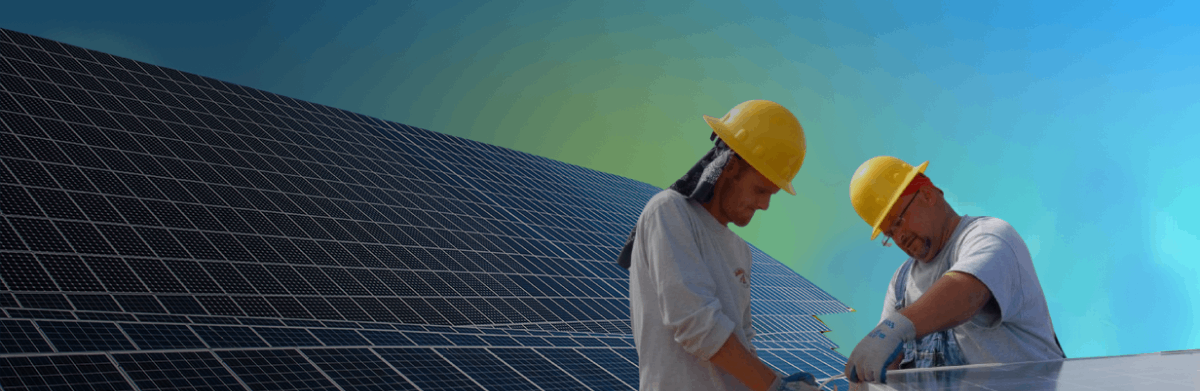
A solar panel is a device that converts solar energy (sunlight) into electrical energy by using photovoltaic (PV) cells. PV cells are made of materials that produce excited electrons when exposed to light. The electrons flow through a circuit and produce direct current (DC) electricity, which can be used to power various devices or stored in batteries. The most commonly used solar panels have 72 cells and 60 cells, which are 2m x 1m and 1.6m x 1m, respectively.
Solar panels are usually arranged in groups called arrays or systems. A PV system consists of one or more solar panels, an inverter that converts DC electricity to alternating current (AC) electricity, and other components such as controllers, meters, and trackers. Most panels are in solar farms or rooftop solar panels which supply the electricity grid
Types of Solar Panel
There are 4 types of Solar Panel
- Monocrystalline solar panels
- Polycrystalline solar panel
- Passivated Emitter and Rear Contact cells (PERC)
- Thin-film solar panels
Monocrystalline solar panels
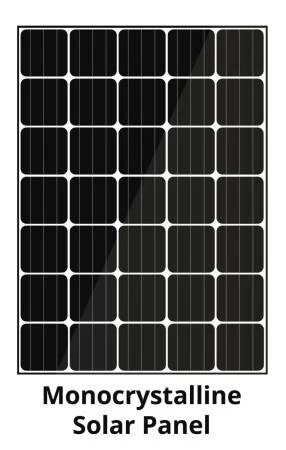
Monocrystalline solar panels are also known as single-crystal panels. They are made from pure silicon crystal which is sliced into several wafers forming cells. They can be easily identified by their black or dark blue colour, as they are made from pure silicon.
Within monocrystalline solar panels, there is a technology known as Half Cut cells. Here the square-shaped cells are cut in half, so there are twice the number of cells.
Polycrystalline Solar Panel
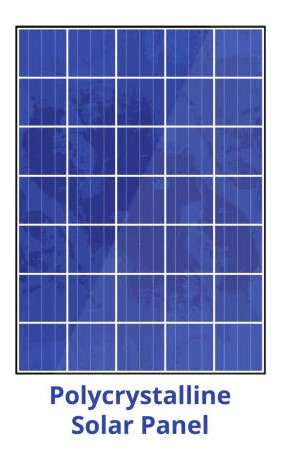
Polycrystalline solar panels are composed of multiple silicon crystals. They are made from silicon fragments that are melted and poured into a square mould. Once these crystals are cooled, they are sliced into thin wafers and assembled together to form a polycrystalline solar panel. They are also known as “multi-crystalline” panels. Polycrystalline solar panels have lower efficiency than monocrystalline solar panels as they are composed of multiple silicon crystals due to which there is limited room available for the electrons to move
Passivated Emitter and Rear Contact cells (PERC)
PERC solar panels are manufactured using advanced technology. It is done by adding a layer on the back of solar cells. The traditional solar panels absorb sunlight only to some extent and some light passes straight through them. The additional layer in the PERC panels allows this unabsorbed sunlight to be absorbed again from the rear side of the panels, making it even more efficient.
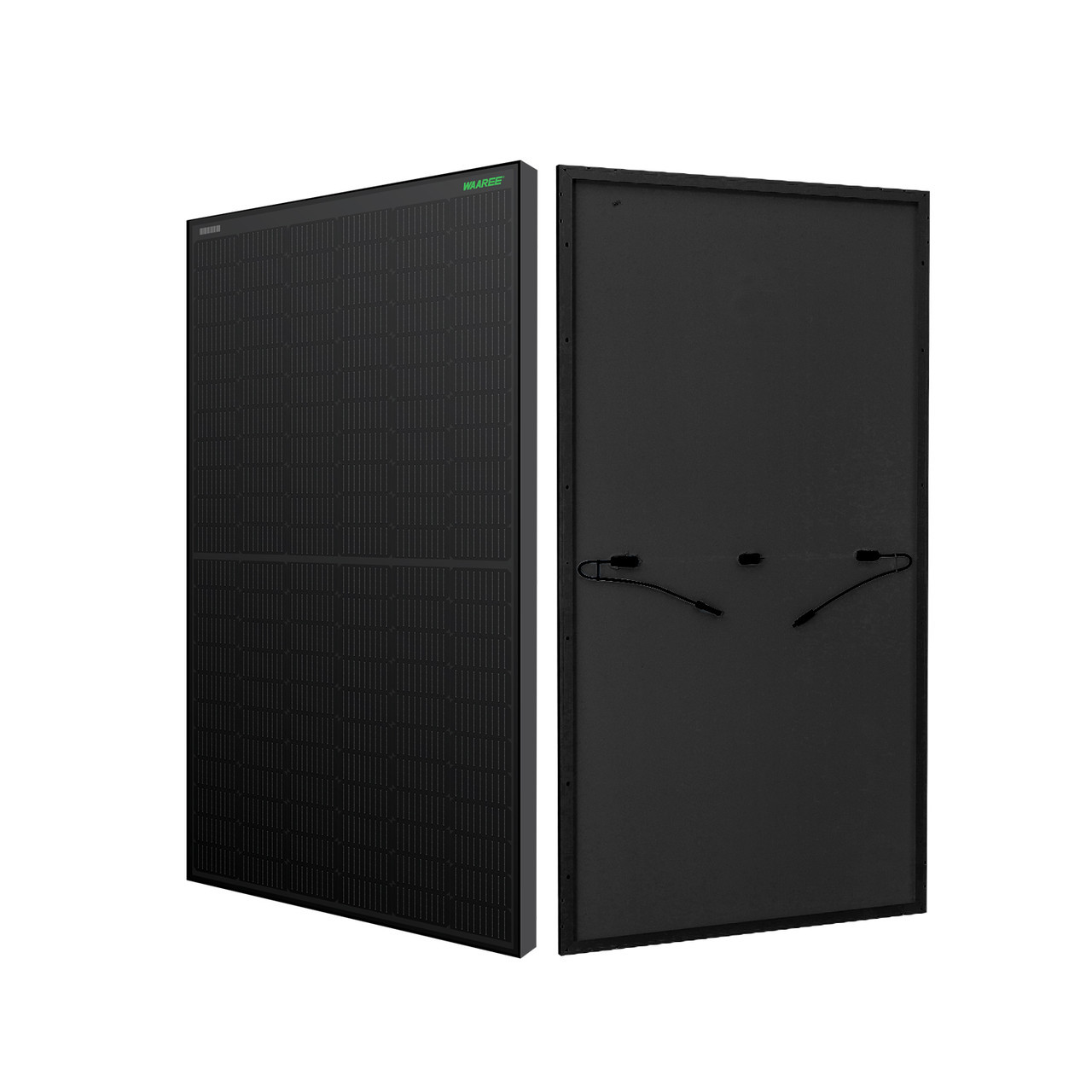
PERC solar panels are more efficient, high-efficiency Mono-PERC panels which have the highest power ratings among commercially available solar panels.
Thin-film solar panels
monocrystalline and polycrystalline solar panels, thin-film solar panels are manufactured using photovoltaic substances which include Amorphous silicon (a-Si), copper indium gallium selenide (CIGS) and cadmium telluride (CdTe). These substances are deposited onto a solid surface such as glass, metal or plastic making it lighter and easy to install.
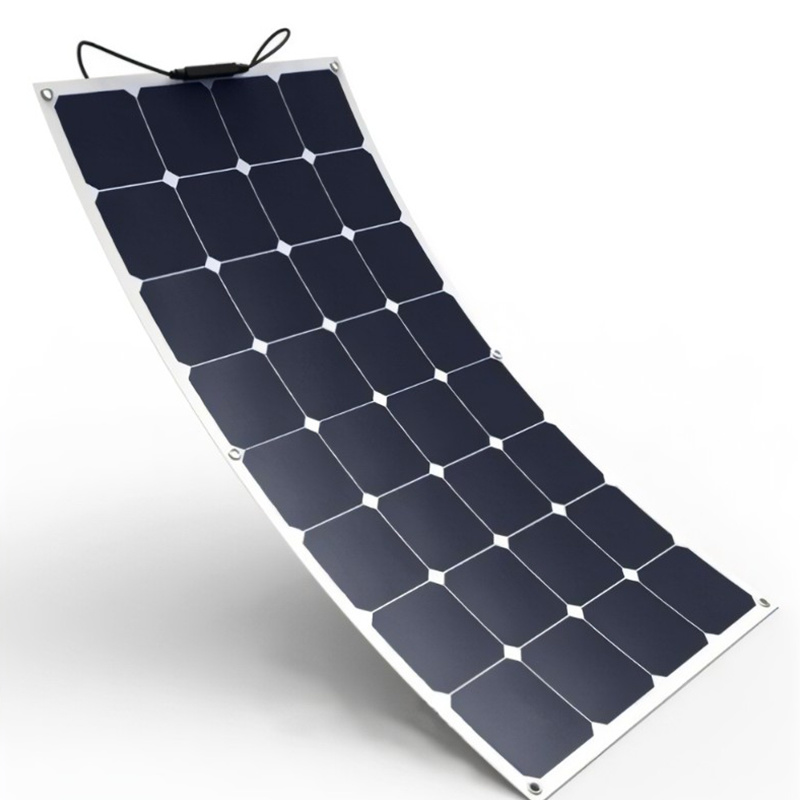
Thin-film solar cells are comparatively lightweight and more flexible than traditional silicon panels, thus making them easy to install.
Leave a Reply